







Darknet Safety & Security
The darknet is a hostile environment. It is populated not only by curious users but by scammers, malware authors and, increasingly, law enforcement. This guide — written for researchers, journalists, security analysts and the genuinely curious — explains the real risks and the operational habits that professionals use to reduce them. It is educational: it describes threats and defensive principles, not how to engage in illegal activity.
The threat model, honestly
Most darknet users will never be victims of a sophisticated attack. The threats that actually matter, in rough order of frequency, are:
- Financial scams — being defrauded by a vendor, market or "service."
- Phishing — fake sites and messages that steal login credentials or funds.
- Malware — hostile downloads, exploit pages and fake software.
- Law enforcement operations — the same network is actively policed.
- Exposure — careless behavior linking your real identity to your activity.
Anonymity software protects the connection. It does not protect you from human error, greed or naivety — which is where nearly all real-world harm originates.
Scams and fraud
The most common crime against users is not hacking — it is simple fraud. Familiar patterns include:
- Exit scams — a market or vendor collects money, then disappears. (See the Evolution exit scam.)
- Non-delivery — vendors who take payment and never ship.
- Selective scamming — vendors who deliver small orders to build reputation, then steal on a large final batch.
- "Guaranteed" service scams — hitman, hacking, passport and similar "services" that take deposits and vanish. Most such offers are fraudulent.
- Recovery and blackmail scams — messages claiming "your identity is exposed; pay to keep it quiet."
Malware and hostile sites
Darknet sites are not exempt from the ordinary malware economy — they are a prime delivery channel. The realistic risks:
- Exploit pages — a site that attacks your browser the moment it loads. Keeping the Tor Browser updated is the single most effective defense; Tor has been targeted with real browser zero-days.
- Fake software — "Tor alternatives," "wallets" and "tools" that are actually trojans. Only install software from its official source.
- Documents — malicious PDFs and scripts are used to fingerprint or compromise researchers.
Professionals who must inspect hostile content use disposable virtual machines or dedicated hardware, never their primary machine.
Phishing and clone sites
Because .onion domains have no registrar, they are easy to impersonate. Attackers create near-identical "clone" sites that visually match a real market or forum, then harvest login credentials and wallet seeds. Countermeasures are simple and standard:
- Use the official address, verified from a trusted source (a real website, newsroom, or the project's own site).
- Never enter credentials from a link received in chat, email or forum DM.
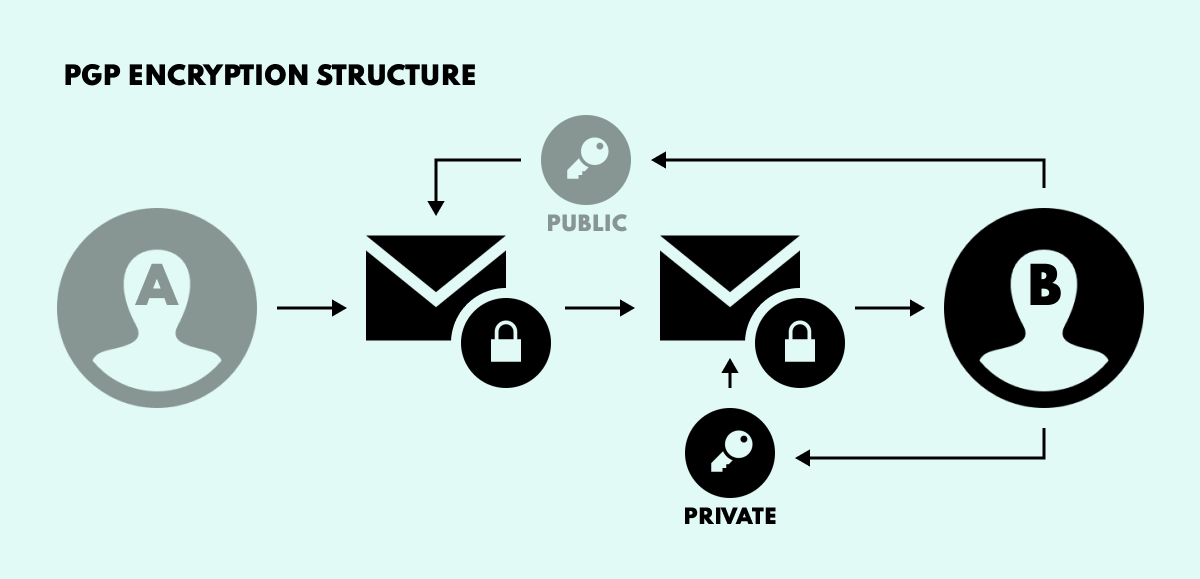
- Use PGP-encrypted login challenges — a hallmark of genuine markets and forums.
Operational security basics
Operational security ("OPSEC") is the discipline of minimizing the information you reveal. The principles used by security researchers are not secrets; they are habits:
- Separate identities — never use your real email, phone, or username on the darknet.
- No personal metadata — photos and documents leak location, device and language information.
- Unique credentials — one password per service, stored in a local password manager; reuse is how breaches cross over.
- Compartmentalize — if one identity is compromised, the others must survive.
- Assume the network is monitored — it is, by multiple parties, including law enforcement.
None of this is about committing crime — it is the same hygiene expected of any professional handling sensitive data.
Cryptographic hygiene
Encryption is the darknet's native language, and knowing how it is used matters for understanding the ecosystem:
- PGP/GPG — used to sign messages, encrypt sales orders, and prove that a vendor really is who they claim. A PGP key is a market identity's anchor.
- Verified keys — check key fingerprints through multiple independent channels.
- End-to-end encryption — for any sensitive communication, ensure the channel is actually end-to-end and not merely transport-encrypted.
Good cryptographic hygiene does not make anyone untouchable — but its absence is the fastest way to become a statistic.
Law enforcement risk
The darknet is not a legal vacuum. Every major market's history is a history of successful investigations: Silk Road, AlphaBay, Hydra. The risks are real and compound:
- Monitoring — market infrastructure and Bitcoin flows are tracked continuously by multiple agencies and firms.
- Undercover operations — agents run vendor accounts and even entire markets (Hansa was operated by police for a month after seizure).
- Postal interdiction — physical goods sent by mail are a choke point; international packages are screened.
- Cross-border coordination — takedowns now routinely span Europol, FBI, DEA, German, Dutch and other authorities simultaneously.
The honest summary from a decade of prosecutions: the technology has never been the main reason people were caught. Behavior was. Reused usernames, personal metadata, careless money movement and trusting the wrong people account for nearly all arrests.